Brain Fog in Perimenopause: Causes and Solutions
Health, Brain Fog, Perimenopause Symptoms, Wellness Tips
Brain Fog During Perimenopause: Why It Happens and What Helps
If you are in your 40s or early 50s and suddenly struggling to remember words, losing your train of thought mid-sentence, or rereading the same email three times, you are not alone. Many women report brain fog during perimenopause as one of the most unsettling changes they experience, right alongside hot flashes and sleep problems. Understanding why this happens—and what actually helps—can bring both relief and a sense of control.
What Brain Fog During Perimenopause Really Feels Like
Brain fog is not a medical diagnosis, but a cluster of perimenopause symptoms related to thinking and memory. Many women describe it as:
Trouble concentrating on tasks that used to feel easy
Forgetting appointments, names, or why you walked into a room
Slower processing speed—needing more time to think things through
Feeling mentally “foggy,” hazy, or not quite like yourself
Because our culture often equates sharp thinking with competence, these changes can trigger anxiety about cognitive decline or even fears of early dementia. The reassuring news: for most women, perimenopausal brain fog is temporary and closely tied to hormonal changes, not permanent brain damage.
The Hormone–Brain Connection: Why It Happens
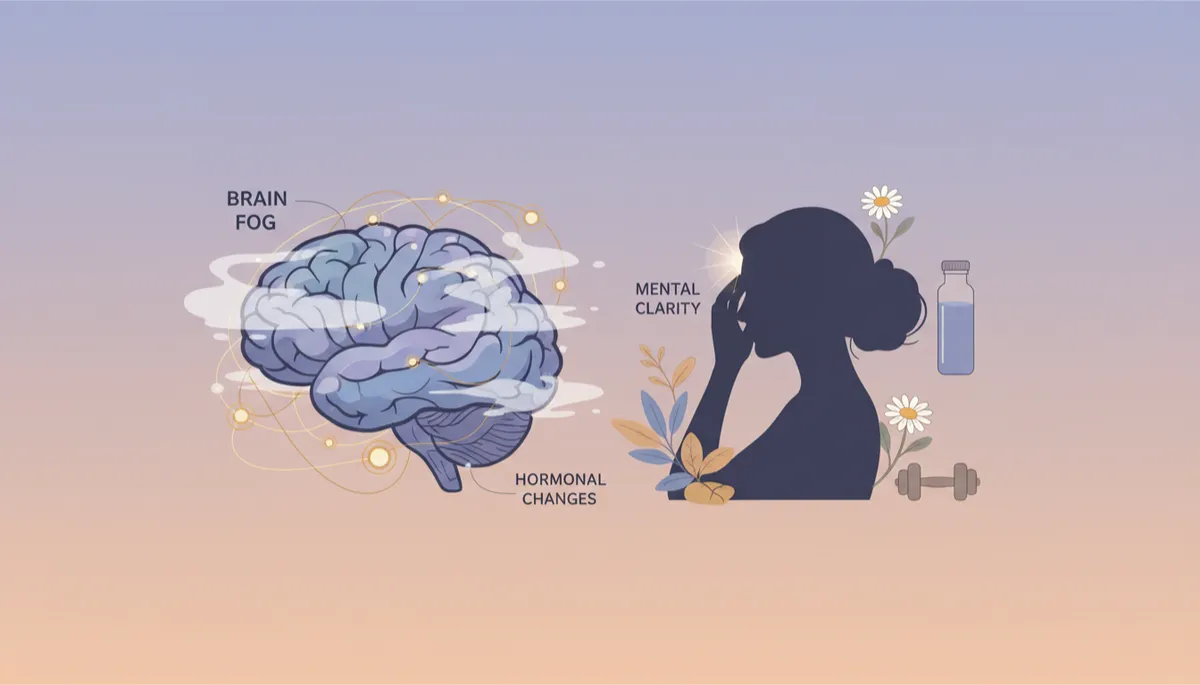
Perimenopause is the transition leading up to menopause, when levels of estrogen and progesterone begin to fluctuate and gradually decline. These hormones do far more than regulate the menstrual cycle—they also influence brain function, mood, and energy. This is where the connection between hormonal changes and cognitive decline-like symptoms comes in.
Estrogen and Your Thinking Brain
Estrogen interacts with brain regions involved in memory, attention, and learning, such as the hippocampus and prefrontal cortex. It helps support:
Blood flow to the brain, delivering oxygen and nutrients
Communication between nerve cells (synaptic activity)
Production of neurotransmitters that affect mood and alertness
During perimenopause, estrogen levels can swing dramatically from high to low. These fluctuations can disrupt the brain’s usual rhythm, leading to lapses in attention, word-finding difficulties, and that familiar feeling of mental “fuzziness.” It may feel like cognitive decline, but in many cases it is your brain reacting to a shifting hormonal environment.
Sleep, Mood, and Stress: The Hidden Amplifiers
Hormones are not acting alone. Other common perimenopause symptoms can quietly worsen brain fog:
Poor sleep from night sweats or insomnia undermines memory and focus the next day.
Low mood or anxiety makes it harder to concentrate and absorb new information.
Chronic stress raises cortisol, a hormone that, in excess, can interfere with memory and mental clarity.
When you combine hormone swings with disrupted sleep, emotional strain, and the demands of work, caregiving, and daily life, it is no surprise that your brain feels overloaded.

Simple daily habits can gently support mental clarity during perimenopause.
What Helps: Practical Ways to Clear the Fog
While you cannot stop perimenopause, you can absolutely influence how your brain navigates this transition. These evidence-informed wellness tips support mental clarity and overall wellbeing.
1. Prioritise Restorative Sleep
Sleep is when your brain consolidates memories and clears out metabolic “waste.” To protect against cognitive decline-like symptoms:
Keep a consistent bedtime and wake time, even on weekends.
Cool your bedroom and use breathable bedding to ease night sweats.
Limit caffeine and screens in the evening to help your brain wind down.
2. Move Your Body to Support Your Brain
Regular physical activity increases blood flow to the brain, boosts mood, and supports hormone balance. Aim for a mix of:
Brisk walking, cycling, or swimming for cardiovascular health
Strength training to protect bones and muscles as estrogen declines
Gentle yoga or stretching to lower stress and calm the nervous system
3. Nourish Your Brain with Food and Hydration
A balanced, Mediterranean-style pattern—rich in vegetables, fruit, whole grains, legumes, nuts, and healthy fats—has been linked with better brain health. To support mental clarity:
Include omega-3 sources like salmon, sardines, walnuts, or flaxseeds.
Stay hydrated; even mild dehydration can worsen brain fog.
Watch added sugars and heavy alcohol intake, which can disrupt sleep and mood.
4. Train and Tidy Your Mind
Your brain thrives on both challenge and structure. To manage brain fog day to day:
Use external supports—lists, calendars, reminders—so you are not relying on memory alone.
Focus on one task at a time instead of multitasking, which strains attention.
Engage your brain with reading, learning a language, or puzzles to keep cognitive skills active.
5. Talk to a Healthcare Professional
If brain fog is affecting your work, relationships, or confidence, it is worth discussing with your doctor or a menopause specialist. They can:
Rule out other causes such as thyroid issues, anaemia, or vitamin deficiencies.
Explore options like hormone therapy or non-hormonal medications when appropriate.
📌 Key Takeaway: Brain fog during perimenopause is common and usually reversible. Paying attention to sleep, stress, movement, and nutrition can significantly improve mental clarity.
Moving Through Perimenopause with Compassion and Clarity
Experiencing brain fog can be unsettling, but it is also a signal that your body and brain are adapting to a new hormonal landscape. By understanding the link between hormonal changes and cognitive decline-like symptoms, you can respond with informed wellness tips rather than fear. Small, consistent steps—protecting your sleep, moving your body, nourishing your brain, and seeking support when needed—can help you navigate perimenopause with greater ease and confidence, and gradually reclaim the mental clarity that feels like you.
