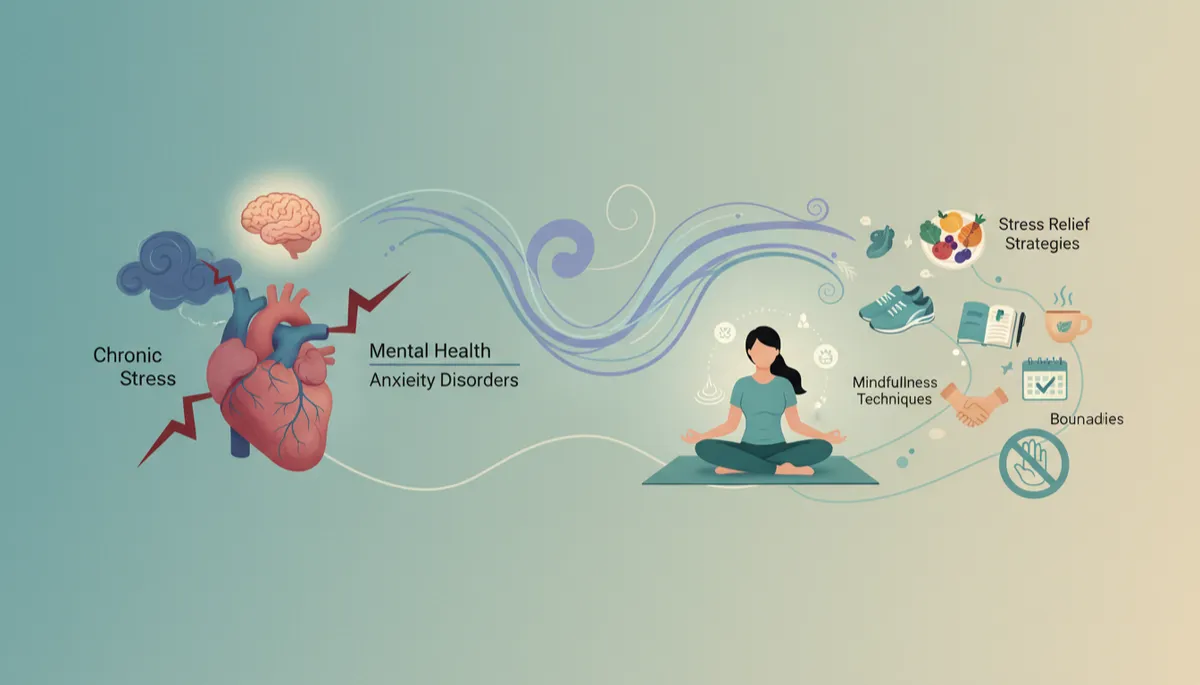
Chronic Stress: Impact on Heart, Mind & Life
Health, Chronic Stress, Mental Wellbeing
Chronic Stress: How It Impacts Your Heart, Mind, and Daily Life
Chronic stress is more than feeling busy or overwhelmed for a few days. When your body stays in “fight-or-flight” mode for weeks or months, it can quietly raise your heart disease risk, fuel anxiety disorders, and deepen depression. The good news: simple, realistic stress relief strategies can help you reclaim your health, one small habit at a time.
Why Chronic Stress Is So Harmful
Short bursts of stress can actually be helpful, sharpening your focus before an exam or an important meeting. But chronic stress keeps stress hormones like cortisol elevated for long periods. Over time, this can:
Increase blood pressure and inflammation, raising your heart disease risk.
Disrupt sleep and concentration, contributing to anxiety disorders.
Drain your energy and motivation, making depression more likely or more severe.
You may notice constant worry, muscle tension, headaches, digestive issues, or feeling “on edge” all the time. These are not just personality quirks; they are signals from your body that your stress system is overloaded.
Why Some People Are More Vulnerable to Stress
Not everyone responds to stress in the same way. Several factors shape your vulnerability:
Genetics: Some people are biologically more sensitive to stress hormones and more prone to mental health conditions like anxiety and depression.
Social support: Strong relationships buffer stress. Feeling isolated usually makes stress feel heavier and harder to manage.
Coping style: Healthy coping mechanisms—like problem-solving, talking things through, or using mindfulness techniques—help you recover faster. Avoidance, numbing with alcohol, or constant scrolling tend to prolong stress.
Childhood trauma: Early experiences of instability, neglect, or abuse can “wire” your nervous system to be on high alert, making adult stress feel more intense and harder to shake.
💡 Gentle reminder: If stress feels harder for you than for others, it’s not a character flaw. Your history and biology matter—and you can still build new skills.
Simple Daily Stress Relief Strategies
You don’t need a complete life overhaul to start feeling better. Evidence-based stress relief strategies can fit into a normal week and still protect your heart and mind.
Move your body: Aim for 150 minutes of moderate exercise per week—about 30 minutes, five days a week. Walking, cycling, dancing, or swimming all help lower blood pressure and calm your nervous system.
Eat mostly whole foods: A balanced diet rich in fruits, vegetables, whole grains, lean protein, and healthy fats stabilizes blood sugar and supports mental health.
Practice mindfulness or meditation: Even 5–10 minutes a day of focused breathing or body scans can reduce anxiety and improve emotional regulation. These mindfulness techniques train your brain to respond rather than react.
Minimize screen time: Constant news, emails, and social media keep your brain on high alert. Try screen-free blocks in the evening or a “no phone” rule at meals.

Journaling and simple rituals can turn daily stress into moments of reflection.
Additional Ways to Support Your Mind and Body
Journaling: Writing about your thoughts and feelings helps you process them instead of carrying everything in your head.
Reduce caffeine: Keep intake under 400 milligrams (mg) daily—about four small cups of coffee—to prevent jitteriness and sleep disruption that can worsen anxiety.
Spend time with loved ones: Meaningful connection is one of the most powerful natural coping mechanisms. Even a short call or walk with a friend can lower stress levels.
Practice deep breathing: Slow, diaphragmatic breaths signal safety to your nervous system. Try inhaling for four counts, exhaling for six, for a few minutes.
Create boundaries: Learning to say “no” is a powerful form of self-care. Protecting your time and energy reduces chronic overload and resentment.
If chronic stress is affecting your daily life, reaching out to a therapist, doctor, or counselor is a strong and courageous step. With the right support and practical tools, you can lower your heart disease risk, ease anxiety and depression, and build a calmer, more resilient life—one small habit at a time.
