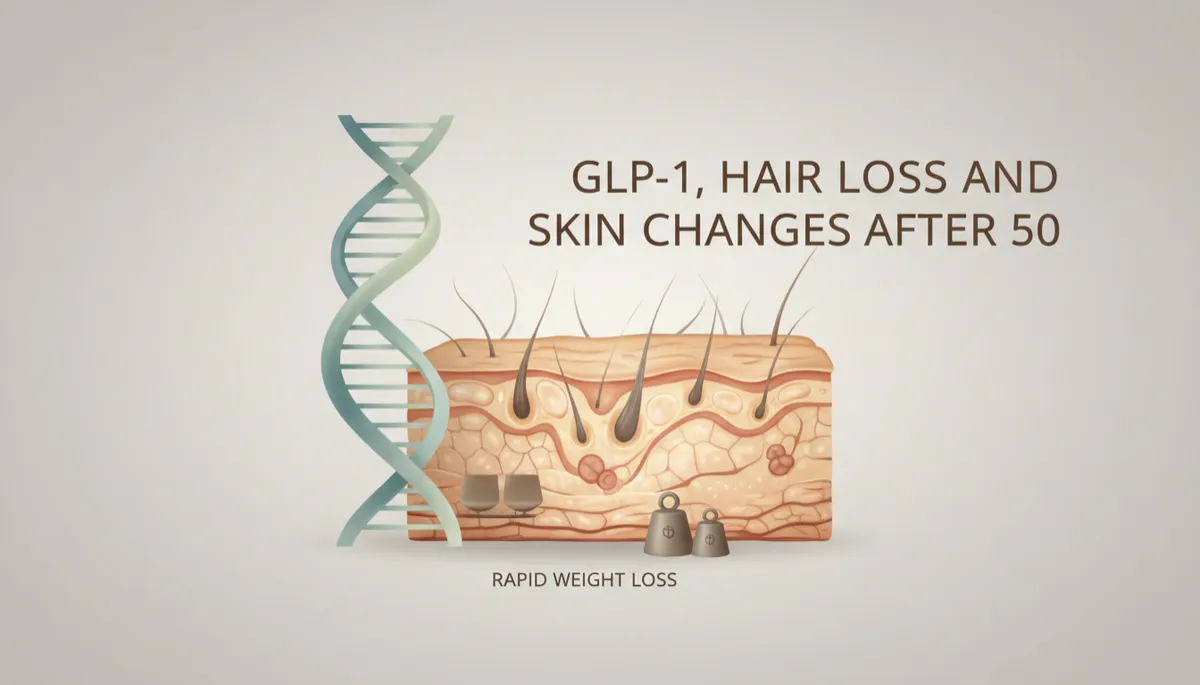
GLP-1 Effects: Hair Loss & Skin Changes After 50
GLP-1, Hair Loss, Skin Changes, Menopause, Nutritional Considerations
GLP-1, Hair Loss, and Skin Changes After 50: What’s Really Going On?
If you’re over 50, starting a GLP-1 medication for diabetes or weight management, and suddenly noticing more hair in the shower or new changes in your skin, you’re not imagining it. These shifts can feel alarming, but they’re usually the result of several overlapping factors—rapid weight loss, menopause effects, and nutritional considerations—rather than a single “cosmetic disaster.”
GLP-1 and Rapid Weight Loss: Why Your Body Feels “Stressed”
GLP-1 medications like semaglutide and tirzepatide can lead to significant, sometimes rapid weight loss. Clinical trials show that a small but real number of people on GLP-1s report hair loss—often a type called telogen effluvium, which is shedding triggered by physical or emotional stress. Similar patterns are seen after major surgery, illness, or very low-calorie diets.
When weight drops quickly, your body may shift resources toward vital organs and away from “nonessential” functions like hair growth. That doesn’t mean GLP-1 therapy is unsafe, but it does mean that how fast you lose weight—and what you eat during that process—matters for your hair and skin health.
Hair Shedding After 50: More Than Just the Medication
Many people on GLP-1s notice increased hair shedding a few months into treatment or after a dose increase. Research suggests GLP-1 users have a higher risk of non-scarring hair loss compared with some other diabetes drugs, but that risk is still modest—and often temporary. For many, the shedding reflects the combination of rapid weight loss, age-related changes, and existing genetic tendencies to thinning hair, rather than permanent damage to the follicles.
After 50, hair is already more vulnerable. Hormonal shifts can shorten the growth phase of hair, while long-term sun exposure, illness, medications, and stress all add up. A sudden calorie cut or inadequate protein intake can be the final nudge that pushes more hairs into the shedding phase at once, making the problem much more visible.

Gentle, steady weight loss with adequate protein can support healthier hair over time.
Menopause Effects and Skin Changes: Estrogen’s Quiet Exit
Around menopause, dropping estrogen levels change your skin from the inside out. Studies show that collagen production declines, skin becomes drier and thinner, and elasticity decreases. You may see more fine lines, sagging along the jawline, or crepey texture on the neck and chest. Brown spots, slower healing, and even late-onset breakouts can also appear as hormones fluctuate.
When you add GLP-1–driven rapid weight loss to these menopause effects, skin changes may feel more dramatic. A smaller body can make existing laxity and wrinkles more noticeable, especially on the face, arms, and abdomen. That doesn’t mean you’ve “ruined” your skin; it means your skin is adjusting to a new hormone and weight environment at the same time.
💡 Gentle reminder: Dryness, thinning, and fine lines after 50 are common outcomes of aging and menopause, not personal failures or proof that treatment has gone wrong.
Nutritional Considerations: Feeding Hair and Skin During GLP-1 Therapy
You don’t have to choose between metabolic health and appearance, but you may need to be more intentional about nutrition. Experts often suggest aiming for adequate protein—roughly 1.2–2.0 grams per kilogram of body weight per day, depending on your health status—to help preserve muscle, support hair growth, and maintain skin structure during weight loss. Talk with your clinician or dietitian about what’s appropriate for you.
Include protein at each meal (fish, eggs, Greek yogurt, tofu, beans, lean meats).
Choose colorful vegetables, fruits, and whole grains for vitamins, minerals, and fiber.
Add healthy fats (olive oil, nuts, seeds, avocado) to support skin barrier function and satiety.
Hydration also matters. Drier, postmenopausal skin often benefits from both internal fluids and a simple, gentle skincare routine that focuses on moisture and sun protection rather than aggressive “anti-aging” promises.
When to Talk to Your Healthcare Team
If you’re noticing significant hair loss, rapid skin changes, or feeling distressed, bring it up with your healthcare provider. They can review your rate of weight loss, check for nutrient deficiencies like iron, vitamin D, or B vitamins, and decide whether a referral to a dermatologist or dietitian makes sense. Some people benefit from slowing the pace of weight loss or adjusting their GLP-1 dose, but those decisions are individual and medical—never one-size-fits-all.
Most importantly, remember that your experience is valid. GLP-1 therapy, hair loss, skin changes, rapid weight loss, menopause effects, and nutritional considerations are all intertwined. Understanding what’s really happening inside your body can help you make calmer, more informed choices about your health after 50—without chasing quick cosmetic fixes or giving up on treatments that may be helping your long-term wellbeing.
