
GLP-1 Medications: Effective Weight Management
Health, Weight Management
GLP-1 Medications for Weight Management: How They Work and What to Do While Taking Them
GLP-1 medications have become a major talking point in weight management, offering new hope to people who have struggled with traditional diet and exercise alone. If you are considering one of these medications, or have recently started, understanding how they work and what you can do to support your health while taking them is essential.
What Are GLP-1 Medications?
GLP-1 stands for glucagon-like peptide-1, a hormone your body naturally produces in the gut. It helps regulate blood sugar, digestion, and appetite. GLP-1 medications are prescription drugs that mimic or enhance this hormone, helping your body use food and stored energy more effectively. Some were first developed to treat type 2 diabetes, and many are now also approved or used for weight management in people with obesity or overweight, sometimes with weight-related health conditions.
How GLP-1 Medications Work in the Body
GLP-1 medications support weight loss through several coordinated effects. Understanding these can help you make sense of how you feel on treatment and why lifestyle choices still matter.
1. They Help You Feel Full Sooner and for Longer
One of the most noticeable effects is appetite reduction. GLP-1 medications act on areas of the brain involved in hunger and fullness, helping you feel satisfied with smaller portions. They also slow how quickly food leaves your stomach, which can make you feel fuller for longer after meals. Many people describe it as “the food noise getting quieter,” making it easier to walk away from second helpings or high-calorie snacks.
2. They Support Healthier Blood Sugar Levels
GLP-1 medications stimulate insulin release when blood sugar rises after eating and reduce the amount of sugar your liver releases into the bloodstream. For people with type 2 diabetes, this can mean better blood sugar control. Even if you do not have diabetes, steadier blood sugar levels can help reduce energy crashes and intense cravings that often lead to overeating highly processed foods.
3. They May Influence Long-Term Weight Regulation
Weight is regulated by a complex system involving hormones, genetics, environment, and behavior. GLP-1 medications do not “cure” obesity, but they can help reset some of the signals that push your body to regain lost weight. By reducing hunger and improving how your body responds to food, they can support more sustainable weight loss when combined with lifestyle changes.
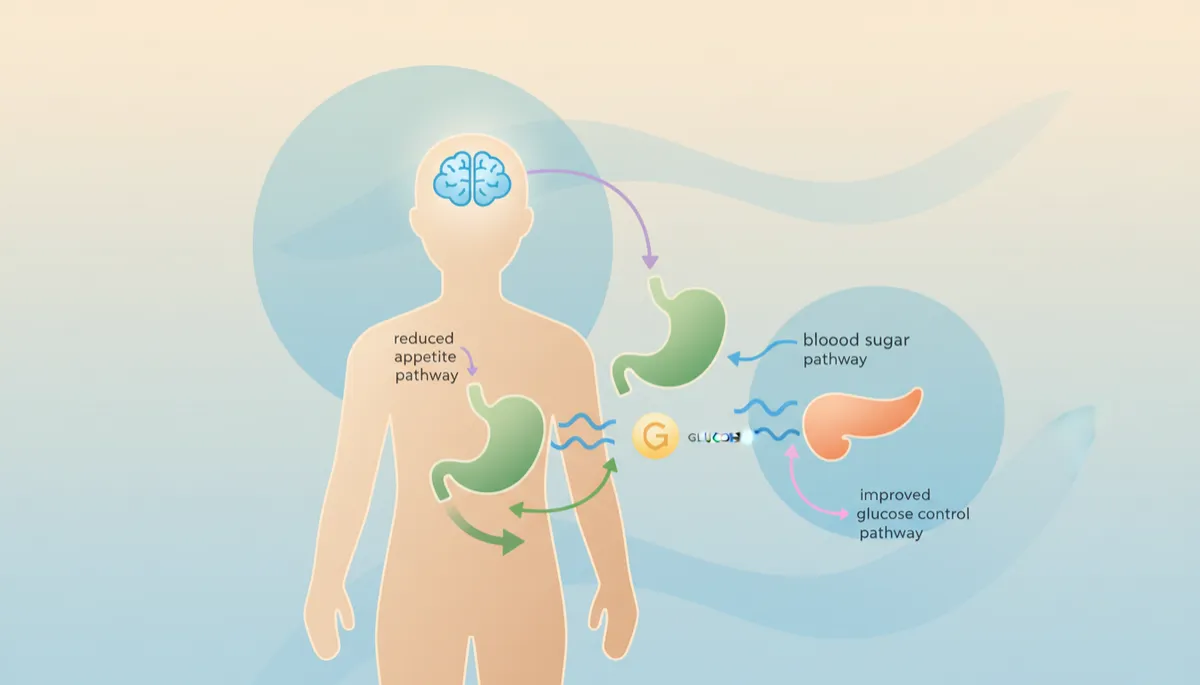
GLP-1 medications work on the gut and brain to reduce hunger and stabilize blood sugar.
What to Do While Taking a GLP-1 Medication
Medication is just one part of the picture. How you eat, move, and care for yourself while on a GLP-1 can shape your results, reduce side effects, and build habits that last even if you eventually stop the drug.
1. Prioritize Protein, Fiber, and Hydration
Because you may naturally eat less, every bite matters. Aim to include a source of lean protein (such as poultry, fish, eggs, tofu, beans, or Greek yogurt) at each meal to help preserve muscle as you lose weight. Add high-fiber foods like vegetables, fruits with skin, whole grains, and legumes to support digestion and fullness. Sip water regularly throughout the day; this can ease common side effects like nausea and constipation and support overall well-being.
2. Eat Slowly and Respect Your New Fullness Signals
GLP-1 medications can make it uncomfortable if you eat too quickly or too much. Try using smaller plates, taking small bites, and pausing between them. Stop when you feel comfortably satisfied, even if there is food left on your plate. This is not about restriction; it is about listening to your body’s cues, which may feel different than before treatment.
3. Build a Gentle but Consistent Movement Routine
You do not need an extreme workout plan to benefit. Start with what feels realistic: walking most days of the week, light strength exercises a few times per week, or activities you enjoy such as dancing, swimming, or cycling. Movement helps protect muscle, supports mood, and may enhance weight-loss results. If you are new to exercise or have medical conditions, talk with your healthcare provider before making big changes.
4. Monitor Side Effects and Stay in Touch With Your Provider
Common side effects include nausea, reduced appetite, constipation, diarrhea, or stomach discomfort, especially when doses are increased. These often improve over time, but it is important to let your provider know what you are experiencing. They may adjust your dose, change how quickly you increase it, or suggest strategies like smaller, more frequent meals. Seek urgent care if you have severe abdominal pain, persistent vomiting, difficulty breathing, or signs of dehydration.
5. Support Your Mental and Emotional Health
Weight management is not only physical. You may notice changes in your relationship with food, body image, or social situations that revolve around eating. Consider journaling, joining a support group, or working with a therapist or dietitian who understands GLP-1 medications. Celebrate non-scale victories such as improved energy, easier movement, or better sleep, not just the number on the scale.
Setting Realistic Expectations and Planning Ahead
GLP-1 medications can lead to meaningful weight loss, but progress is usually gradual. Some weeks the scale may not move much, even when you are doing everything “right.” Focus on trends over time, not day-to-day fluctuations. It is also helpful to talk early with your provider about how long you might stay on the medication and what a maintenance plan could look like, whether that involves continuing the drug, tapering, or transitioning to lifestyle strategies alone.
📌 Key Takeaway: GLP-1 medications are a powerful tool, not a shortcut. Combining them with nourishing food choices, regular movement, emotional support, and close medical follow-up gives you the best chance of safe, sustainable weight management.
Always follow your prescriber’s instructions, never share your medication, and discuss any questions or concerns with a qualified healthcare professional who knows your medical history. With the right information and support, GLP-1 medications can be part of a thoughtful, long-term approach to caring for your health.
