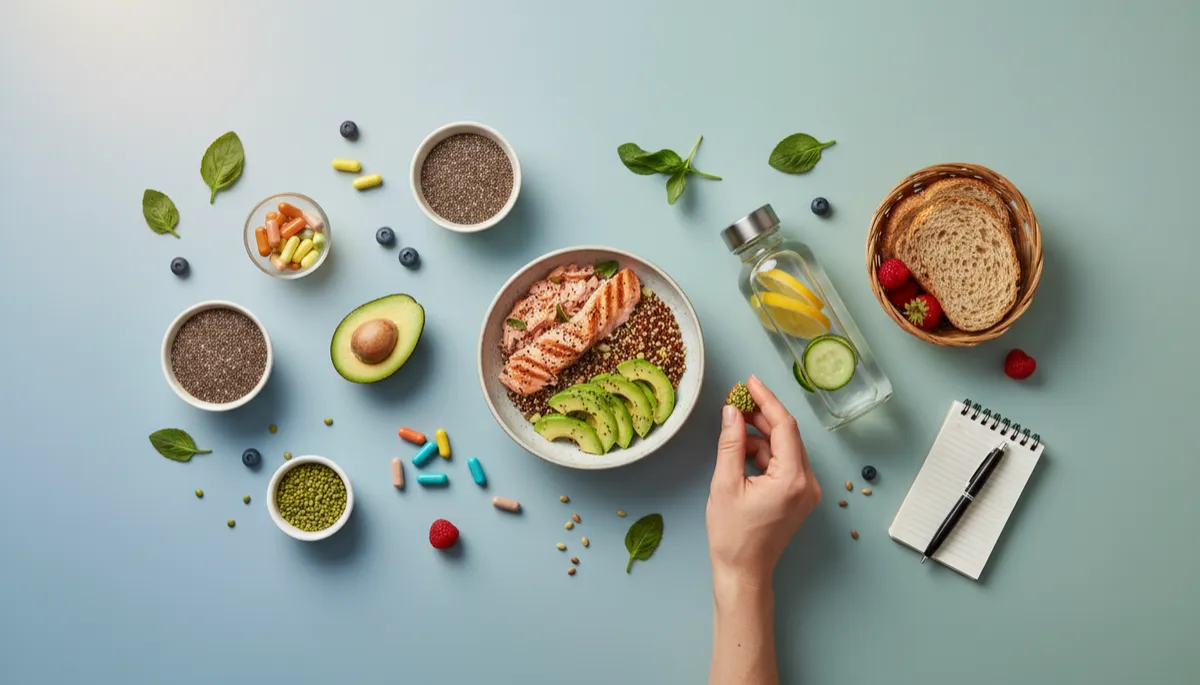
GLP-1 Nutrition: 7 Tips for Women 50+
GLP-1 Nutrition, Nutrition For Women 50+
What to Eat on GLP-1 When You're Not Hungry: 7 Nutrition Strategies for Women Over 50
GLP-1 medications can be powerful tools for weight and blood sugar management, but the loss of appetite they cause can leave you wondering, “What should I eat when I’m just not hungry?” These seven GLP-1 nutrition strategies are designed specifically for women over 50, helping you protect muscle, energy, and long-term health while your appetite is dialed down.
1. Think “protein-rich small meals,” not big plates
When your appetite is low, large meals can feel overwhelming. Instead, focus on protein-rich meals in snack-sized portions every three to four hours while you’re awake. This protects muscle mass, which is especially important for nutrition for women 50+, when natural muscle loss speeds up.
½ cup Greek yogurt with berries and a sprinkle of nuts
A hard-boiled egg with a slice of whole-grain toast
Cottage cheese with cucumber slices and cherry tomatoes
💡 Pro Tip: Aim for 15–25 grams of protein per mini meal to support strength and metabolism.
2. Hydration strategies: Sip, don’t chug
GLP-1 medications can slow digestion, and dehydration can worsen nausea, headaches, and constipation. Gentle, steady hydration strategies work best. Keep a water bottle nearby and sip throughout the day rather than drinking large amounts at once, which can make you feel overly full.
Flavor water with lemon, cucumber, or mint for variety.
Include herbal teas, broth, or sparkling water if plain water is unappealing.
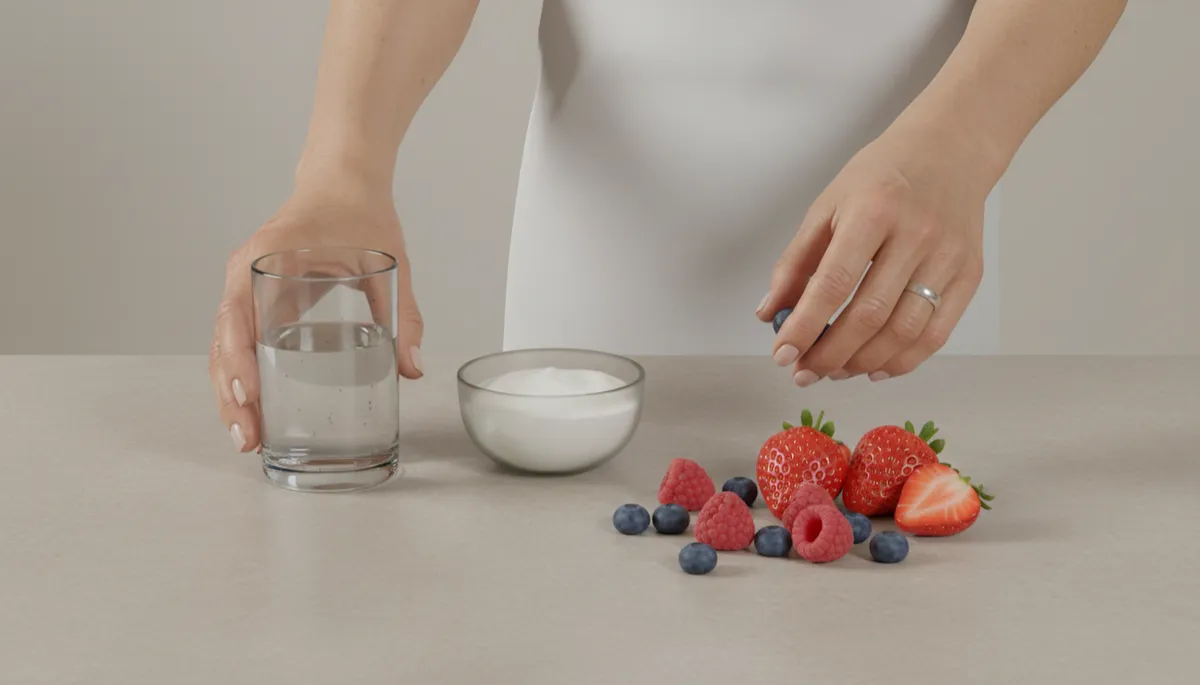
Pairing steady hydration with mini meals supports digestion and energy on GLP-1.
3. Gentle fiber intake to keep things moving
Fiber supports blood sugar balance, heart health, and regularity, but too much too fast can cause discomfort—especially when your stomach feels “sluggish.” Focus on fiber intake from soft, easy-to-chew foods:
Oatmeal made with milk or a fortified plant milk
Soft fruits like ripe pears, peaches, or berries
Cooked vegetables instead of large raw salads
4. Prioritize nutrient adequacy, not perfection
With reduced appetite, your overall calorie intake may drop. That makes nutrient adequacy crucial. Think of every bite as an opportunity to deliver vitamins, minerals, and protein rather than “filler” foods that don’t give much back.
Choose fortified dairy or plant milks for calcium and vitamin D.
Include colorful fruits and vegetables for antioxidants that support healthy aging.
📌 Key Takeaway: When you’re eating less, quality matters more than quantity.
5. Use smoothies and soups for easy nourishment
When chewing feels like a chore, blended options can be a gentle form of GLP-1 nutrition. Try a smoothie with protein powder, Greek yogurt, fruit, and a handful of spinach, or a pureed vegetable soup with beans or lentils for protein and fiber.
6. Plan around your “hungriest” time of day
Many women notice they feel a bit hungrier at a specific time—often late morning or early evening. Use that window for a more complete, balanced plate: lean protein, a small portion of whole grains, and vegetables. This supports appetite management while ensuring at least one solid meal each day.
7. Gentle mindset shifts for managing reduced appetite
Finally, managing reduced appetite is as much mental as it is physical. Instead of pressuring yourself to “finish a plate,” set small, realistic goals: a few bites of protein, a glass of water, half a piece of fruit. Listen to your body, but remember your long-term health goals too.
💬 Remember: GLP-1 medications are a tool. Pairing them with thoughtful nutrition for women 50+—protein-rich meals, smart hydration, and steady fiber intake—helps you feel your best today and protect your health for years to come.
