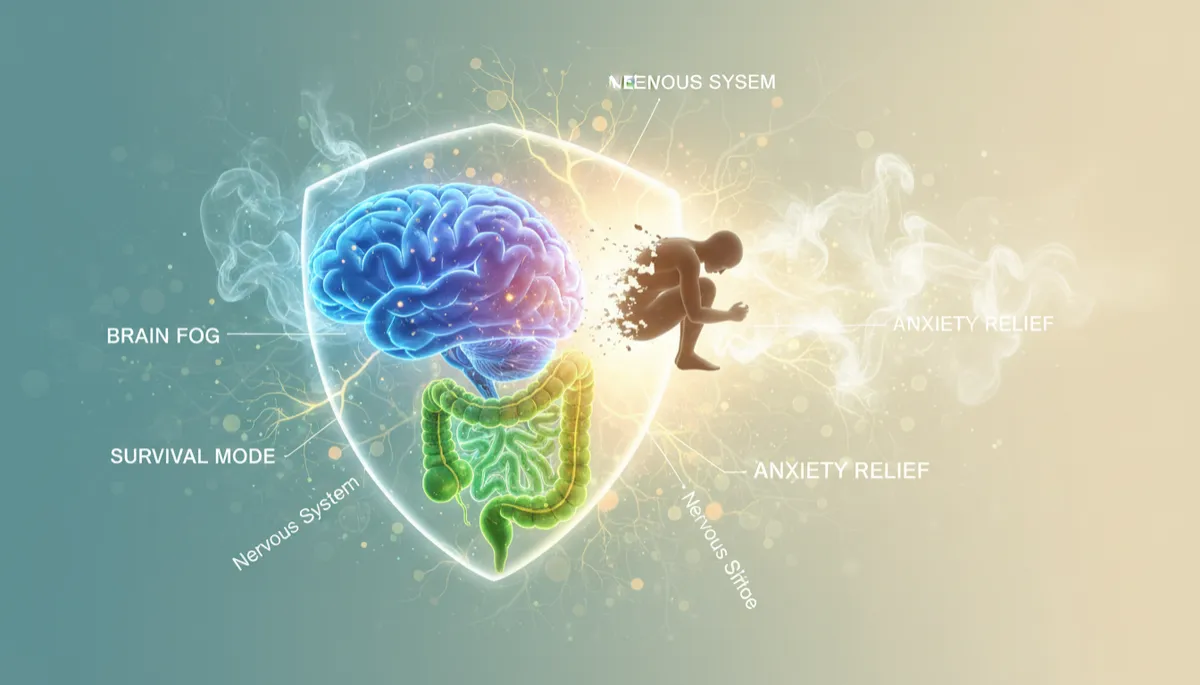
Gut-Brain Connection: Anxiety & Survival Mode
Anxiety Relief, Gut Health, Nervous System
When Anxiety Isn’t “All in Your Head”: The Gut–Brain Survival Mode Connection
If you feel stuck in anxiety, brain fog, or a nagging sense that something is just off, it may not be a mindset problem at all. Often, your body—especially your gut—is quietly sending distress signals that keep your nervous system locked in survival mode.
Anxiety and Brain Fog: Signals, Not Personal Failures
Many people blame themselves for not being “positive enough” or disciplined enough when they struggle with Anxiety Relief or constant mental clutter. You might push harder with affirmations, mindset work, or productivity hacks—yet still wake up with racing thoughts, a tight chest, and brain fog that makes it hard to focus or remember simple things.
What if those symptoms are actually your body trying to protect you? Anxiety, mental fatigue, and that “off” feeling can be early warning signs that something deeper is happening in your biology, especially in the gut. When you treat them only as mindset issues, you can miss a major piece of the puzzle—and unintentionally keep yourself stuck.
Your Gut: The Hidden Control Center of the Nervous System
Your gut health is far more than digestion. The gut is lined with its own network of nerves, often called the “second brain,” and it constantly communicates with your central nervous system through the vagus nerve and chemical messengers. When your gut is calm and nourished, it sends signals of safety, allowing your body to rest, digest, think clearly, and feel present.
But when the gut is inflamed or the gut barrier is compromised—sometimes described as “leaky gut”—your body reads that as an internal threat. Tiny food particles, toxins, or bacterial fragments can pass through the weakened barrier and trigger the immune system. These biological factors don’t just stay in the gut; they send alarm signals throughout the body, including to the brain.
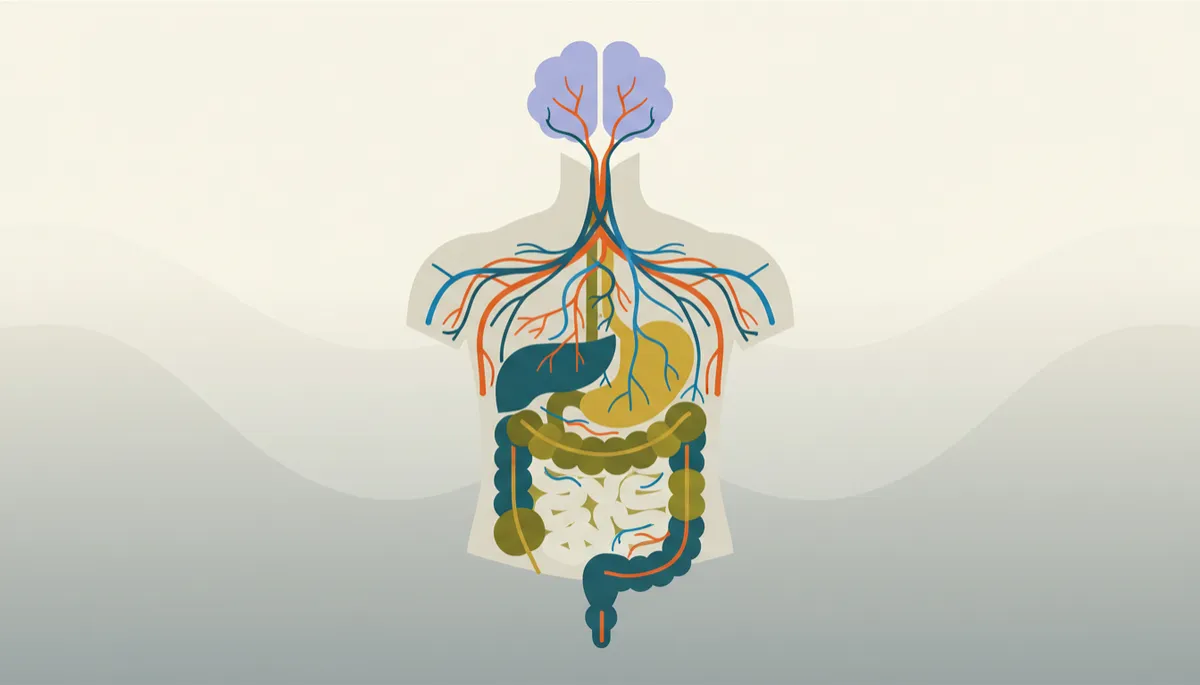
Chronic gut inflammation can quietly keep your brain and body stuck in alert mode.
Survival Mode: When Your Body Thinks You’re in Danger
Your nervous system has one primary job: keep you alive. When it detects danger—whether from a stressful job, an argument, or internal inflammation—it flips into survival mode. In this state, blood flow shifts away from digestion and long-term thinking toward immediate protection. Your heart rate increases, muscles tense, and your brain starts scanning for threats, even when nothing obvious is wrong in your environment.
If your gut is chronically inflamed, your nervous system may interpret that as an ongoing attack. The result? Persistent anxiety, irritability, and difficulty relaxing. Over time, this can also contribute to brain fog—that heavy, cloudy feeling where your thoughts feel slow and your memory unreliable. It’s not that you’re lazy or unmotivated; your brain is simply reallocating its resources to deal with what it believes is a constant threat.
💡 Key Insight: You can’t mindset your way out of survival mode if your biology keeps sending danger signals.
Biological Factors That Can Drive Anxiety and Brain Fog
Several biological factors can quietly undermine your efforts at Anxiety Relief and mental clarity:
Gut inflammation: Triggered by highly processed foods, excessive sugar, alcohol, food sensitivities, or chronic stress, leading to immune activation and nervous system alarm.
Imbalanced gut bacteria: Helpful microbes produce calming neurotransmitters like serotonin and GABA; when they’re depleted, anxiety and low mood may increase.
Nutrient deficiencies: Low levels of B vitamins, magnesium, omega-3 fats, or iron can impact energy, focus, and mood regulation.
Blood sugar swings: Skipping meals or relying on sugary snacks can cause crashes that mimic or worsen anxiety and brain fog.
When these factors stack up, your body has plenty of reasons to stay on high alert. Recognizing this doesn’t mean mindset tools are useless—it means they work far better when your biology isn’t fighting against you.
Supporting Gut Health to Calm the Nervous System
If you’re longing for genuine Anxiety Relief and clearer thinking, consider working with your body instead of against it. Small, consistent shifts in gut health can send powerful “you’re safe” messages to your nervous system and gradually ease survival mode.
Prioritize real food: Emphasize vegetables, fruits, quality proteins, healthy fats, and whole grains while reducing ultra-processed snacks and sugary drinks that fuel inflammation.
Feed your microbes: Include fiber-rich foods and, if appropriate for you, fermented foods like yogurt, kefir, or sauerkraut to support a diverse microbiome.
Stabilize blood sugar: Build meals with protein, fat, and fiber so your energy and mood stay steadier throughout the day.
Engage the vagus nerve: Gentle practices like slow breathing, humming, light movement, and time in nature can calm the nervous system and support digestion.
⚠️ Important: If your anxiety, gut symptoms, or brain fog are intense or persistent, seek guidance from a qualified healthcare professional rather than self-diagnosing.
You’re Not Broken—Your Body Is Communicating
When you understand how closely gut health, the nervous system, and the brain are linked, anxiety and brain fog start to look less like character flaws and more like messages. Your body may be saying, “Something inside needs attention.” By honoring both mindset and biology, you create a more compassionate, effective path out of survival mode and into genuine safety, clarity, and calm.
