
Manage Wegovy Headaches: Tips & Solutions
Health, GLP-1 Medications, Wegovy Side Effects
Why Wegovy Can Give You a Headache — And How to Manage It
Starting Wegovy (semaglutide) for weight loss or metabolic health is a big step. For many people, it’s exciting and hopeful — but early side effects, especially headaches, can be frustrating. Understanding why they happen and how to manage them can make your GLP-1 journey much smoother.
Why Wegovy Can Give You a Headache
Headaches are a known side effect of Wegovy and other GLP-1 medications. Not everyone gets them, and for many people they are temporary, but there are several reasons they can show up — especially in the first weeks or after a dose increase.
1. Dehydration and Fluid Shifts
Wegovy slows digestion and often reduces appetite. You might eat less, snack less, and even forget to drink as much water as usual. On top of that, some people experience nausea, vomiting, or diarrhea when they start the medication, which can cause fluid loss. Even mild dehydration is a common trigger for headaches, making this one of the most likely reasons you feel that dull or throbbing ache after starting a GLP-1.
2. Changes in Blood Sugar Levels
GLP-1 medications like Wegovy help your body handle blood sugar more effectively. If you have diabetes or prediabetes, your levels may start to come down. If you don’t have diabetes, you may still eat less or go longer between meals as your appetite drops. For some people, these shifts can cause episodes of low or rapidly changing blood sugar, and headache is a classic symptom of that.
3. Rapid Dietary and Caffeine Changes
Many people use Wegovy as a fresh start and suddenly change how they eat and drink. You might cut back on sugar, processed foods, or caffeine all at once. While these changes are positive long term, they can be a shock to your system. Caffeine withdrawal in particular is notorious for causing pounding headaches in the first few days of cutting back.
4. Nausea, Vomiting, and Not Eating Enough
If Wegovy makes you feel queasy, you may naturally avoid food and drink. Skipping meals, eating very little, or going long stretches without fuel can lead to low blood sugar, fatigue, and headaches. If vomiting or diarrhea occur, fluid and electrolyte loss can make the headache even worse and contribute to lightheadedness or a “washed out” feeling.
5. Your Body Adjusting to a New Medication
Any time you start a new medication that affects hormones, appetite, and digestion, your body needs time to adapt. For some people, headaches are simply part of that adjustment period. They may appear after your weekly injection or when your dose is increased, then gradually fade as your system gets used to the new level.
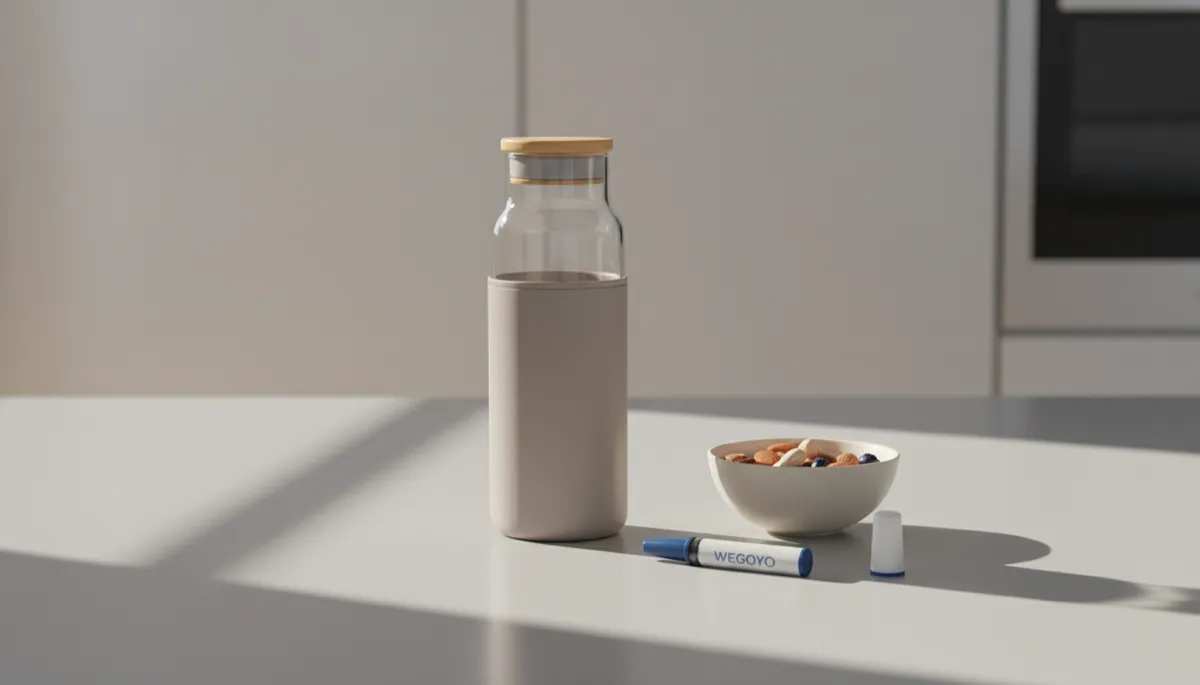
Simple routines like fluids and light snacks can significantly reduce Wegovy-related headaches.
How to Manage Wegovy-Related Headaches
The good news: for most people, headaches on Wegovy are manageable and often temporary. A few practical strategies can make a big difference in how you feel day to day.
1. Prioritize Hydration (With Electrolytes if Needed)
Aim to sip water regularly throughout the day, not just when you feel thirsty. Keeping a refillable bottle nearby is a simple but powerful habit. If you’ve had vomiting, diarrhea, or feel especially drained, an electrolyte drink or oral rehydration solution can help replace lost salts and reduce headache intensity. Choose low-sugar or no-sugar options if weight loss is your goal.
2. Eat Small, Consistent Meals or Snacks
Even if your appetite is low, try not to go long stretches without food. Focus on small, gentle options: yogurt, a boiled egg, a piece of cheese, a few nuts, or a slice of whole-grain toast. These can help keep your blood sugar stable and reduce headache triggers without overwhelming your stomach. Many people find that pairing protein with a bit of complex carbohydrate works best.
3. Adjust Caffeine Gradually, Not Overnight
If you’re a regular coffee, tea, or energy drink user, consider tapering your caffeine instead of stopping abruptly when you start Wegovy. For example, mix half regular and half decaf coffee for a week, then decrease further. This slower approach can help prevent withdrawal headaches from piling on top of medication side effects.
4. Time Your Injection Strategically
Some people notice headaches a few hours after their shot or the following morning. If that’s you, talk with your healthcare provider about timing. Taking your weekly dose in the evening or before a quieter day may make it easier to rest, hydrate, and ride out any temporary discomfort.
5. Use Over-the-Counter Pain Relief Safely
For many people, occasional use of over-the-counter medications like acetaminophen or ibuprofen can help take the edge off a Wegovy-related headache. Always follow the dosing instructions on the label, and check with your doctor or pharmacist if you have kidney disease, liver issues, are on blood thinners, or take other regular medications, to make sure pain relievers are safe for you.
6. Support Your Body With Rest and Stress Management
Lack of sleep and stress can turn a mild headache into a stubborn one. Prioritize a regular sleep schedule, dim screens before bed, and build in small calming rituals — such as a short walk, deep breathing, or a warm shower. These simple steps won’t cure every headache, but they reduce the total “load” on your system while it adjusts to Wegovy.
📌 When to Call Your Healthcare Provider: Reach out promptly if your headaches are severe, sudden and unlike your usual headaches, associated with vision changes, confusion, chest pain, shortness of breath, or if you can’t keep fluids down. These may be signs of something more serious that needs medical attention.
The Bottom Line
Wegovy can be a powerful tool for weight management and metabolic health, but side effects like headaches are a real part of the experience for some people. By understanding why they happen — dehydration, blood sugar shifts, dietary changes, and overall adjustment — you can take practical steps to minimize them. Staying hydrated, eating small regular meals, tapering caffeine, and using pain relief wisely often go a long way.
Most importantly, stay in close communication with your healthcare team. Let them know what you’re feeling, especially if headaches are intense or persistent. They can adjust your dose schedule, suggest additional strategies, or check for other causes. With the right support, many people find that early side effects settle down — and they’re able to focus on the long-term benefits of their GLP-1 journey.
