Menopause Symptoms Checklist: Is It Menopause?
Women's Health, Menopause Awareness
Is It Menopause or Something Else? A Symptom Checklist
Many women reach their 40s or 50s and suddenly feel "off"—hot at night, tired all day, moody, or forgetful. You might wonder: is this just stress, a thyroid issue, or classic menopause symptoms? Understanding what's normal, what's related to hormonal changes, and what might signal something else is essential for your health and peace of mind.
1. Is It Menopause or Something Else?
Menopause is officially defined as going 12 consecutive months without a period, usually between ages 45 and 55. The transition phase before that, called perimenopause, can last several years and is when many menopause symptoms begin. Yet, similar symptoms can be caused by thyroid problems, depression, anxiety, vitamin deficiencies, or side effects of medication. That's why it's important not to self-diagnose, but to use a clear symptom checklist and talk to a healthcare professional.
Think of midlife changes as a puzzle: hormones are a big piece, but not the only one. Menopause awareness means recognizing patterns, tracking what you feel, and knowing when something doesn't fit the usual menopause picture and needs further investigation.
2. A Practical Symptom Checklist
Use this simple symptom checklist as a starting point. Check off what you've noticed in the last few months:
Changes in your menstrual cycle (shorter, longer, heavier, lighter, or skipped periods)
Hot flashes or sudden waves of heat, with or without sweating or flushing
Night sweats that wake you up or leave you changing clothes or bedding
Sleep problems: trouble falling asleep, staying asleep, or waking too early
Mood shifts: irritability, anxiety, low mood, or feeling more emotional than usual
Brain fog: forgetfulness, trouble concentrating, or feeling mentally "slower"
Vaginal dryness, discomfort with sex, or more frequent urinary infections
Weight changes, especially more fat around the abdomen, even with the same habits
Joint aches, headaches, or new aches and pains without a clear cause
💡 Pro Tip: Bring your completed symptom checklist to your next appointment. It helps your clinician spot patterns and decide which tests, if any, are needed.
3. Common Menopause Symptoms and Hormonal Changes
The hallmark of menopause is a shift in the hormones estrogen and progesterone. During perimenopause, estrogen levels don't just steadily fall—they fluctuate, sometimes dramatically. These hormonal changes affect the brain, skin, bones, heart, and reproductive system, which is why the list of menopause symptoms is so broad.
Estrogen swings can trigger hot flashes, night sweats, and irregular periods.
Lower progesterone may contribute to sleep difficulties and heavier or more unpredictable bleeding.
Changes in testosterone and other hormones can affect libido, energy, and muscle mass.
Understanding these underlying hormonal changes can make symptoms feel less frightening. They signal a transition, not a personal failing or "loss of control." Still, if symptoms are severe or disruptive, you don't have to simply put up with them—effective treatments and lifestyle strategies are available.
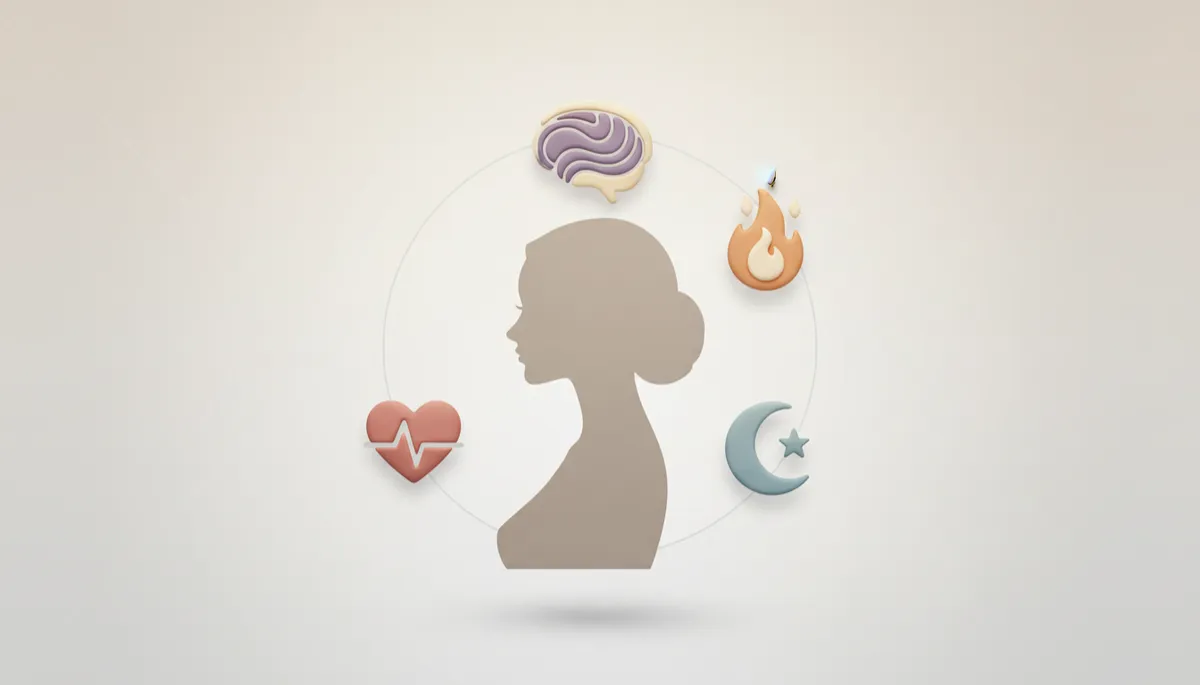
Multiple body systems respond to shifting hormones, which is why menopause feels so wide-reaching.
4. Menopause vs Other Conditions: When to Look Deeper
Sorting out menopause vs other conditions can be tricky, especially when symptoms overlap. For example, fatigue, weight gain, and feeling cold may point toward a thyroid issue, while low mood and sleep problems can be depression, anxiety, or menopause—or a combination of all three.
Consider timing: Symptoms that start in your mid-40s or 50s alongside cycle changes are more likely related to menopause.
Watch for red flags: sudden severe headaches, chest pain, heavy bleeding soaking pads hourly, or unexplained weight loss need urgent medical evaluation, not just a menopause label.
Ask for tests: Your clinician might check thyroid function, iron levels, blood sugar, or other markers to rule out additional causes.
📌 Key Takeaway: It doesn't have to be either menopause or another condition. You can be in menopause and have thyroid disease, anemia, or depression—so a thorough check-up matters.
5. Menopause Awareness and Health Tips for Women
Boosting menopause awareness is about more than naming symptoms. It's about helping women feel informed, validated, and empowered to make choices that support their long-term health. Whether you're just starting to notice changes or are well into postmenopause, these practical health tips for women can make a real difference:
Prioritize sleep: Keep a regular bedtime, limit screens before bed, and keep your bedroom cool to ease night sweats and insomnia.
Move your body daily: Aim for a mix of walking or cardio, strength training, and stretching to protect bones, heart, and mood.
Support your nutrition: Focus on colorful vegetables, lean protein, healthy fats, and adequate calcium and vitamin D for bone health.
Care for your mental health: Talk therapy, mindfulness, journaling, and social connection can all ease mood swings and anxiety.
Discuss treatment options: From hormone therapy to non-hormonal medications and vaginal moisturizers, there are many evidence-based options—ask what's right for your situation.
6. Putting It All Together
Midlife doesn't have to be a mystery. By using a thoughtful symptom checklist, understanding typical menopause symptoms and hormonal changes, and staying alert to signs of menopause vs other conditions, you can advocate for the care you deserve. Most importantly, remember that you're not alone—millions of women are navigating the same transition, and increasing menopause awareness is helping to bring better information and support to everyone.
If your symptoms are affecting your daily life, reach out to a trusted healthcare provider, bring your notes, and ask questions. With the right information and tailored health tips for women, this stage can be not just manageable, but an opportunity to refocus on your long-term well-being.
