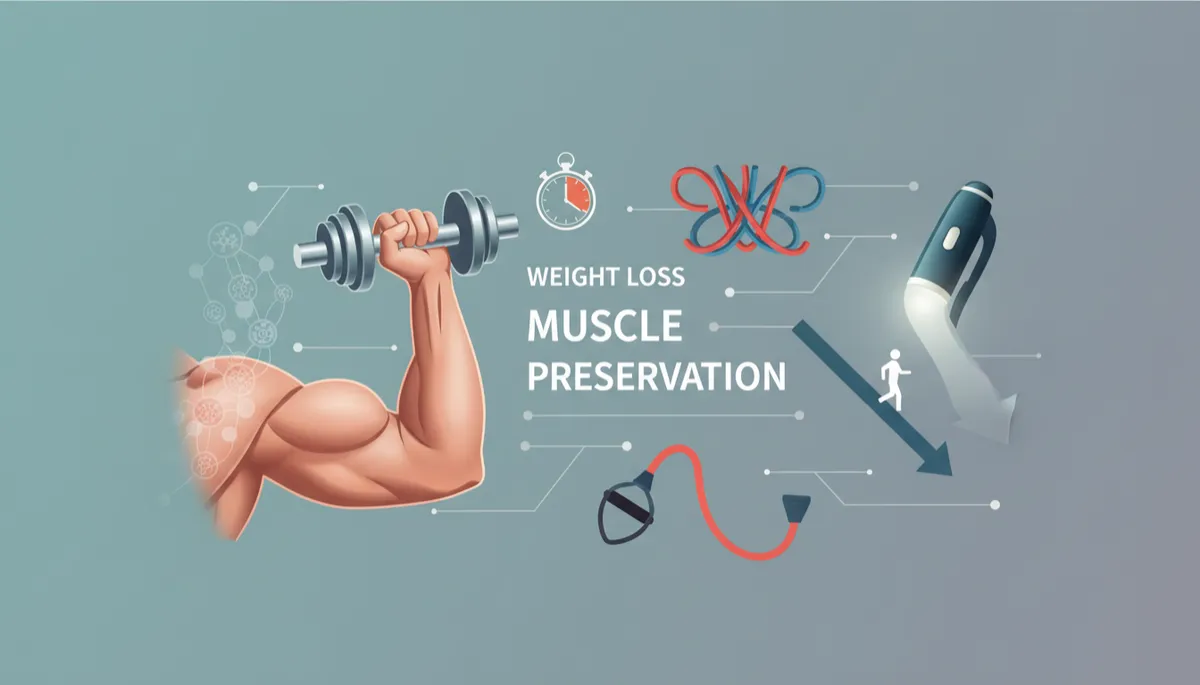
Preserve Muscle While Losing Weight on GLP-1
Weight Loss, Muscle Preservation, GLP-1 Medications
Losing Weight but Also Losing Muscle? How to Stay Strong on GLP-1 Medications
GLP-1 medications have transformed Weight Loss for many people, but rapid changes on the scale can raise a new worry: “Am I losing muscle too?” Preserving strength, especially in midlife and beyond, is just as important as watching the number on the scale. Here’s how to protect your muscles, maintain Lean Mass, and stay strong while using GLP-1 Medications.
Lean Mass vs. Muscle Loss: What’s Really Changing?
When you lose weight, you’re not just losing fat. You’re also changing your lean mass—everything in your body that isn’t fat. That includes muscle, bone, organs, and body water. On paper, a drop in lean mass might sound alarming, but not all of it is true muscle loss.
Early in a Weight Loss journey, especially with GLP-1 Medications that reduce appetite, people often eat fewer calories and carbohydrates. This can lead to lower glycogen (the stored form of carbs in muscle) and less water in the body. Both show up as lost lean mass on body scans, even though your actual muscle fibers may still be intact. That’s why it’s important not to panic over every small change in Lean Mass and instead focus on how your strength and function are doing over time.
Why GLP-1 Medications Can Put Muscle at Risk
GLP-1 Medications help by reducing hunger and slowing digestion. That makes it easier to eat less and lose weight. But if you’re not getting enough protein or doing activities that challenge your muscles, your body may start breaking down muscle tissue along with fat to meet its energy needs. Over time, this can reduce Muscle Preservation, lower your metabolism, and make it harder to keep the weight off.
For Older Adults, this risk is even more serious. Age-related muscle loss, called sarcopenia, already begins in our 30s and speeds up after 60. Combining natural muscle decline with rapid Weight Loss—without a plan—can lead to weakness, slower walking, and higher fall risk. That’s why a strategy to protect muscle isn’t optional on GLP-1 Medications; it’s essential.

Consistent resistance training helps Older Adults maintain mobility and independence.
The Power of Resistance Training for Muscle Preservation
The single most effective tool for Muscle Preservation during Weight Loss is resistance training. This includes any exercise where your muscles work against a load: free weights, machines, resistance bands, or even bodyweight moves like squats and push-ups. When you challenge your muscles regularly, you send a clear signal to your body: “These muscles are needed. Don’t break them down.”
Aim for at least two to three resistance training sessions per week, targeting all major muscle groups—legs, hips, back, chest, shoulders, and arms. You don’t have to lift heavy like a bodybuilder. Start with a weight or resistance that feels challenging by the last 2–3 reps of a set of 8–12. Over time, gradually increase the weight, resistance, or number of repetitions as exercises become easier.
💡 Pro Tip: If you’re new to strength training, ask a trainer or physical therapist to design a simple, 20–30 minute routine you can repeat two or three times a week.
Practical Ways to Monitor Your Strength at Home
You don’t need expensive equipment to keep tabs on Muscle Preservation. In fact, simple strength “check-ins” can be more meaningful than watching Lean Mass numbers on a scale or scan. Try tracking these every 4–6 weeks while on GLP-1 Medications:
Chair stands: Count how many times you can stand up from a chair and sit back down in 30 seconds, without using your hands.
Grip strength: Notice how easily you can open jars, carry groceries, or hold heavy bags. A weakening grip can be an early sign of muscle loss.
Walking speed: Time how long it takes you to walk a set distance, such as from your front door to the end of the block. Slower times over months may signal declining strength or endurance.
Training log: Keep a simple notebook or app record of the exercises, weights, and reps you do. If the numbers are going up or staying steady, you’re likely preserving muscle.
Why Muscle Protection Matters Even More for Older Adults
For Older Adults Fitness is about more than appearance—it’s about independence. Strong legs help you climb stairs and get out of a chair. Strong arms help you carry laundry, lift grandchildren, and catch yourself if you trip. Losing too much muscle during Weight Loss can turn everyday tasks into challenges and increase the risk of falls, fractures, and hospitalizations.
If you’re over 60 and using GLP-1 Medications, talk with your healthcare provider about a plan that includes Resistance Training, enough daily protein, and regular strength checks. Protecting muscle function now can mean more years of living life on your own terms—traveling, socializing, and doing the activities you love.
Bringing It All Together: Strong, Lean, and Healthy
GLP-1 Medications can be powerful partners in Weight Loss, but the goal isn’t just a smaller body—it’s a stronger, healthier one. By understanding Lean Mass versus true muscle loss, prioritizing Resistance Training, and using simple tests to monitor your strength, you can support Muscle Preservation at every stage of your journey. Whether you’re in your 30s or your 70s, protecting muscle today is an investment in how well you’ll move, feel, and live tomorrow.
